Blog7 min read
How to write a love letter when you freeze at a blank page
To write a love letter, start with one memory, not your whole relationship. Say what happened, then what it meant to you, then something true about now, and end with what you want next. That's the whole structure. Below are the five steps with an example for each, a finished letter built from them, and ways to open and close that don't sound borrowed.
How to write a love letter in five steps
Most people freeze because they try to fit everything in. A love letter isn't a summary of the relationship. It's one window into it, held open long enough for them to see what you see. Give yourself twenty minutes and follow these in order:
- Pick one memory. Not the best one, the one that comes back to you when you're doing something else. The night the car broke down. The morning they made you breakfast and burned all of it. Write it in one line before you start.
- Tell it plainly. Write what happened the way you'd tell a friend: where you were, what they did, what was said. "You stood in the rain trying to read the map on your phone while I held the umbrella over the phone instead of you."
- Say what it meant. This is the sentence most letters skip. What did you realise, or feel, or decide? "I remember thinking: this is someone I could get lost with."
- Say something true about now. Bring it into the present with one thing you notice about them these days. "You still check the map three times before we leave the house, and I still love watching you do it."
- End with what you want next. A plan, a hope, a small promise you'll keep. "Let's get lost somewhere new this year. I'll hold the umbrella over you this time."
A love letter example, built from those steps
Here is what the five steps look like as one short letter. A letter like this takes about twenty minutes to write, and it's about 140 words, which fits on one side of a sheet of paper:
I keep thinking about that night in the rain. You were trying to read the map on your phone, and I was holding the umbrella over the phone instead of you, and you didn't say a word about it. You just kept walking, soaked, completely sure we'd find the place. We never found it. We shared a slice of pizza in a bus shelter instead, and it's still one of my favourite dinners.
I remember thinking: this is someone I could get lost with. I didn't say it then, because it was far too early and you had rain in your ears. I'm saying it now.
You still check the map three times before we leave the house, and I still love watching you do it. Let's get lost somewhere new this year. I'll hold the umbrella over you this time.
Notice what it doesn't do: it never says "you're amazing" or "I can't live without you". The memory says it for you. For more on turning moments into lines, our 100 reasons why I love you uses the same method on a list.
How to start a love letter
The greeting is easier than it looks: use the name or nickname you actually call them. "Dear" works for a formal, old-fashioned letter; most people skip it. Then the first sentence. These openings get you straight into the memory, which is where the letter wants to be:
- "I keep thinking about…" followed by the memory.
- "Do you remember…" followed by a moment they'll remember too.
- "I've never told you this, but…" if there's something you noticed and kept to yourself.
- "I'm writing this because…" if there's an occasion: a year together, a move, a hard month.
- "It's late and you're asleep next to me, so…" if it's true. Where you are as you write is a good first line.
How to end a love letter
End on what you want next, then sign off in your own voice. Avoid anything you'd put on a work email. Some sign-offs that work, from simplest to most romantic:
| Sign-off | When it fits |
|---|---|
| Love, then your name | Always. Simple is never wrong. |
| All my love | When the letter is warm but not dramatic. |
| Yours | When you want it to feel like a promise. |
| The name you're saved under in their phone | When you share a joke and want the letter to end on it. |
| Forever yours | For a big moment: an anniversary, a proposal, a goodbye at the airport. |
Then add a P.S. It's often the line they remember longest, so keep it light: an inside joke, a plan for Saturday, "P.S. You still owe me pizza."
What to leave out of a love letter
- Grievances. Even gentle ones. "I know things have been hard because you've been so busy" turns the letter into a conversation you should have in person.
- Exes and comparisons. "Nobody has ever treated me like this" makes them think about who did.
- Promises you can't keep. "I'll never be grumpy again" is a joke you'll both remember on Tuesday. Promise something small and real instead.
- Song lyrics and quotes, unless it's your song. Someone else's words in the middle of yours make the rest sound borrowed too.
- A paragraph apologising for not being good with words. One line is honest. A paragraph is stalling.
How long should a love letter be?
Shorter than you think. The letter above is about 140 words. That's enough for one memory told properly, and it can be read twice in a minute, which is what people do with love letters.
| What it's for | Length | Time to write |
|---|---|---|
| A note in a lunchbox or a coat pocket | Two or three sentences | Five minutes |
| Just because | 100 to 200 words | Twenty minutes |
| An anniversary or a birthday | 200 to 400 words | An evening, with a night's sleep before you reread it |
| Before time apart | As long as one memory needs, or a set of open when letters | Write it a few days before, not the night before |
Handwritten or digital?
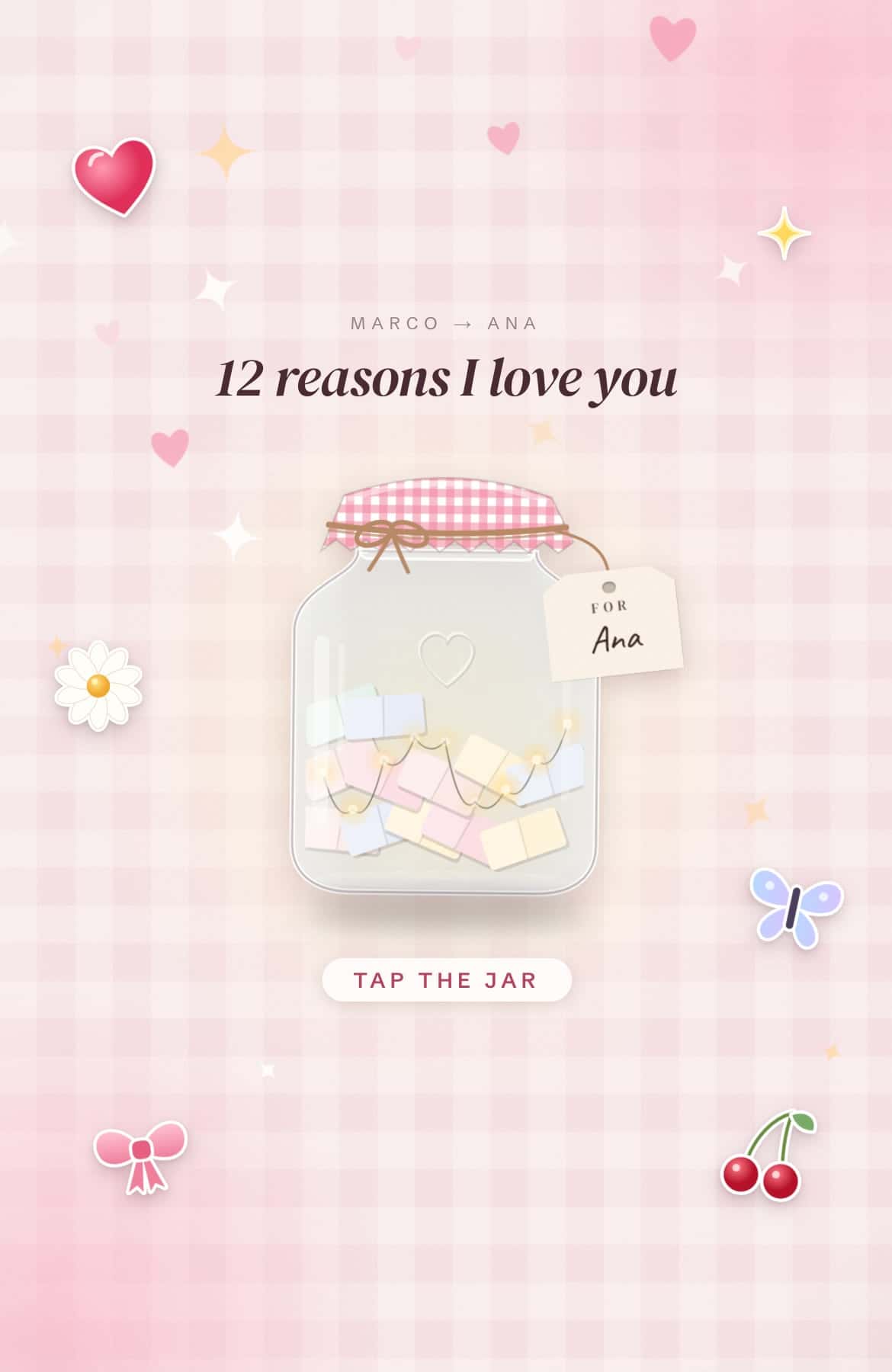
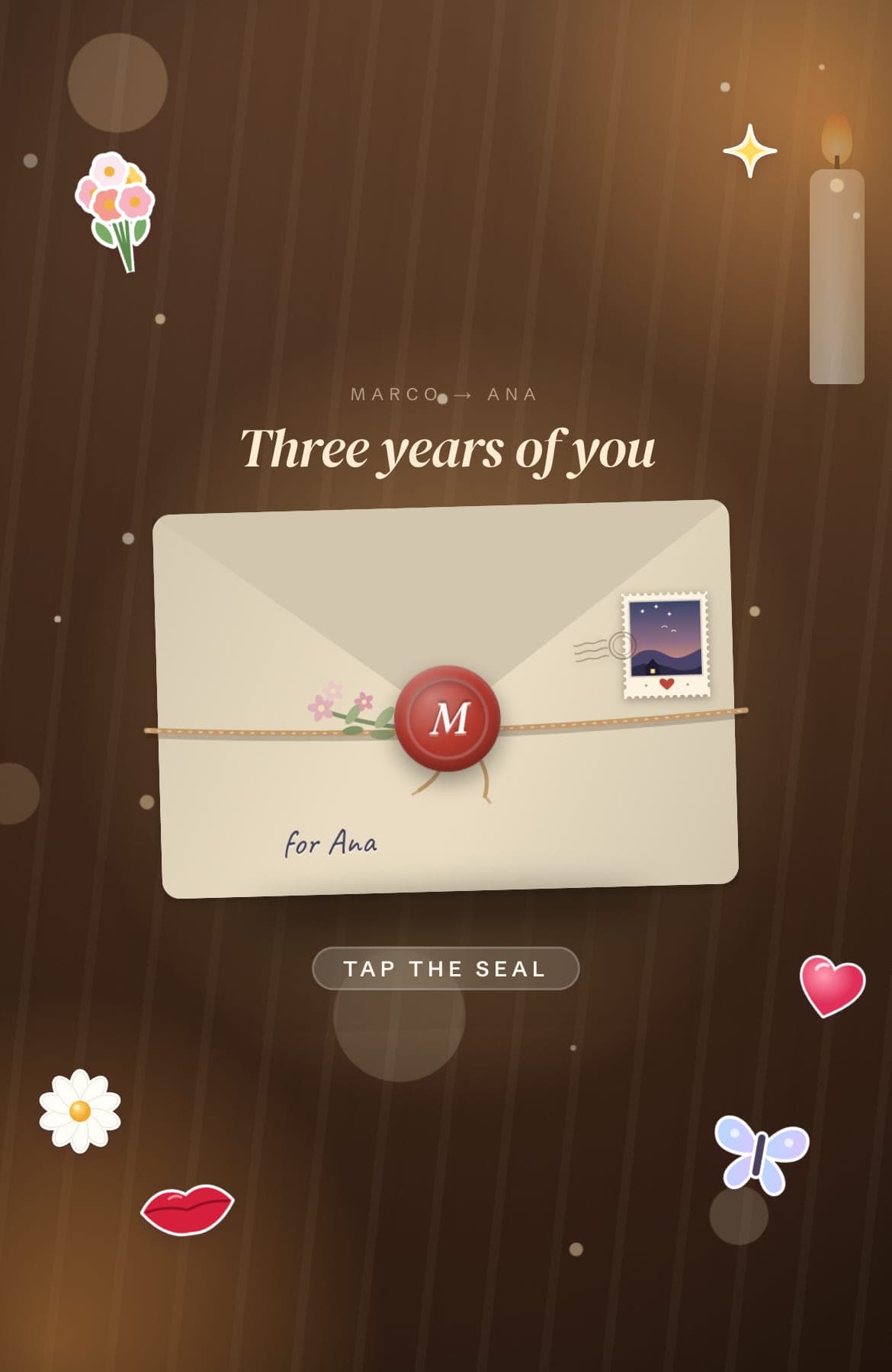
Handwritten, if you'll see them: your handwriting is part of the letter, crossings-out included. Write a draft first, copy it out once, and date it, so years from now they know when you wrote it. If they're far away, send it as a digital gift instead, and add the photo from the memory you wrote about. Having it open at a set moment, such as midnight where they are, is a paid extra on any template.
XOXO and Coquette are premium templates. If you're writing for Valentine's Day, start a week ahead: the letter will be better for a second draft.
Questions people ask
How do you start a love letter?
Use the name or nickname you actually call them, then go straight into a memory: "I keep thinking about the night…" or "Do you remember…". Starting with a specific moment is easier than starting with how you feel, and it pulls the rest of the letter along with it.
What should I write in a love letter?
One memory told plainly, what it meant to you, something true about them now, and what you want next. That structure works for any relationship and any length. Leave out grievances, exes and promises you can't keep.
How long should a love letter be?
Usually 100 to 400 words. A just-because letter can be half a page; an anniversary letter can be a full page. Length matters less than whether each sentence could only be about them, so cut anything that could go in anyone's letter.
How do you end a love letter?
End with what you want next, such as a plan, a hope or a small promise, then sign off in your own voice: "Love", "All my love" or "Yours" followed by your name. A short P.S. with an inside joke is the line they'll often remember longest.